Great Lakes Weekend Trip: Pick One Shoreline Well
- Choose one shoreline and give it most of the weekend
- Start with your real travel budget
- Pick the shoreline by trip shape
- Build the weekend in three blocks
- Give every outdoor anchor a specific backup
- Treat Great Lakes water like open water
- Plan for weather without pretending to predict it
- Keep food from becoming the trip’s villain
- Make reservations in dependency order
- Check access, pets, and group needs directly
- Use a one-page trip sheet
- Sample framework, not a fixed itinerary
- Bring the pub-table mood home safely
Choose one shoreline and give it most of the weekend
A strong Great Lakes weekend uses one shoreline base, one anchor experience, one shorter secondary outing, and one weather-proof alternative. Keep Friday arrival light, protect Saturday for the main activity, and plan Sunday morning near the route home. Before departure, verify official conditions, reservations, access, weather, water hazards, pet rules, and accessibility; lake plans have moving parts, and several of them are literally water.
The five Great Lakes cover too much geography for a meaningful “see them all” weekend. Even visiting two distant shoreline regions can turn a short trip into an extended appreciation of cup holders. Pick the place whose travel time leaves enough daylight and energy to be there.
Start with your real travel budget
Count door-to-door time, not the optimistic driving number displayed before fuel, food, weather, road work, border procedures, and human legs enter the equation. For a Friday-to-Sunday trip, use these questions:
- Can everyone reach the base without arriving too tired for the next day’s activity?
- Is the main destination within a practical morning drive of the base?
- Can Sunday’s stop happen without creating a late-night return?
- Does the plan still work if one outdoor block disappears?
If the answer to the fourth question is no, the itinerary is a forecast wager rather than a weekend plan.
Pick the shoreline by trip shape
These four U.S. National Park Service destinations illustrate different weekend shapes. They are examples, not a complete ranking, and conditions and requirements can change.
| Shoreline anchor | Natural trip shape | Planning emphasis | Official starting point |
|---|---|---|---|
| Indiana Dunes, Lake Michigan | beach, dunes, short hikes, nearby communities | seasonal conditions, parking, beach safety | NPS plan-your-visit page |
| Sleeping Bear Dunes, Lake Michigan | dunes, overlooks, trails, inland-lake options | current conditions, passes, reservations, crowd timing | NPS plan-your-visit page |
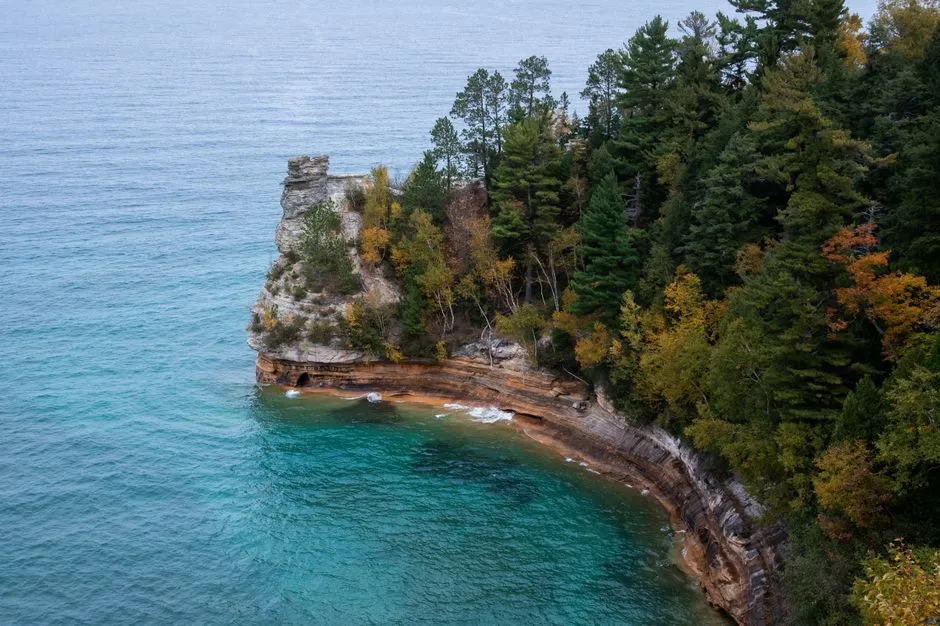
| Pictured Rocks, Lake Superior | cliffs, beaches, hikes, maritime scenery | distance, reservations, exposed-water safety, current closures | NPS plan-your-visit page |
| Apostle Islands, Lake Superior | mainland sites plus island or boat possibilities | weather, water access, transport, reservations | NPS plan-your-visit page |
Indiana Dunes suits a trip that combines a significant natural area with a region that offers indoor and urban alternatives. Sleeping Bear rewards choosing a few dune, trail, and scenic-drive priorities rather than collecting every pin. Pictured Rocks demands respect for distance and Lake Superior conditions. Apostle Islands planning begins with whether you will stay on the mainland or use an authorised transport or activity that reaches the islands.
Do not copy a fixed fee, timetable, trail status, or pet rule from this overview. Open the official destination page when selecting dates and again shortly before leaving.
Build the weekend in three blocks
Friday: arrive, orient, and stop moving
Choose lodging or a campsite that supports the main Saturday plan. After check-in, take a short walk in a developed area, visit an overlook if conditions and access allow, or have dinner near the base.
Friday is not the place for an unfamiliar remote trail after dark simply because traffic took longer than expected. Use the evening to confirm the weather, current alerts, reservation details, sunrise and sunset for the date, and the next day’s driving route.
Download official maps for offline use. Mobile reception can be limited in remote shoreline areas, and a screenshot of one turn is not a complete navigation strategy.
Saturday: one anchor, one optional extra
Protect the best conditions and most energy for the anchor experience: a chosen hike, a beach day in appropriate conditions, an authorised boat tour, a scenic-drive-and-overlook circuit, or a linked set of shorter trails.
Define the anchor by an outcome, not a list:
- “Complete one selected loop and eat lunch at the designated picnic area.”
- “Visit two dune overlooks and spend the afternoon at one guarded beach if open and suitable.”
- “Take the reserved tour, then use a nearby developed trail if time remains.”
The optional extra should be genuinely optional and close by. If it requires another two-hour transfer, it is a second anchor wearing a small hat.
Sunday: stay close to the route home
Choose a visitor centre, lighthouse or maritime site with verified access, accessible overlook, short trail, local museum, or waterfront district near your departure direction. Keep a hard leave time based on the real drive home.
Sunday works best when the final stop can shrink or disappear without ruining the trip. The anchor already happened; this is an epilogue, not a desperate third act.
Give every outdoor anchor a specific backup
“Do something indoors” is not yet a backup. Identify the venue or sheltered activity, official source, approximate travel relationship, and opening verification step before the trip.
Good backup categories include:
- a park visitor centre or museum;
- a maritime or local-history museum;
- an officially open scenic drive with short developed stops;
- a town walking route that can be shortened;
- a café, bookshop, or gallery cluster with verified hours;
- a smaller trail appropriate to the actual conditions.
Match the backup to the hazard. Rain may move a picnic indoors; lightning, high wind, dangerous surf, extreme cold, smoke, or ice can require a more substantial change. A waterproof jacket does not overrule a closure.
Treat Great Lakes water like open water
The lakes can produce waves, currents, cold-water hazards, sudden weather changes, and limited rescue access. NOAA’s rip-current explanation says rip currents occur along Great Lakes shores as well as ocean coasts. NOAA advises swimmers caught in one not to fight the current, but to swim parallel to shore and return toward land at an angle when free of it.
Prevention comes first:
- Check the local beach forecast, warning flags, and closures.
- Prefer guarded swimming areas when available.
- Keep children within active reach and attention around water.
- Wear an appropriate personal flotation device for boating and paddling.
- Do not enter water when local officials advise against it.
- Never mix alcohol with driving, swimming, paddling, or boat operation.
Activity-specific risk varies. Pictured Rocks’ official page explicitly warns that Lake Superior kayaking is dangerous and directs visitors toward appropriate sea kayaks, experience, and guided commercial options. Do not treat a calm photograph as evidence that an exposed-water route suits recreational equipment or first-time paddlers.
If caught in danger, follow local emergency instructions. General reading cannot replace real-time warnings, trained rescue, or a guide appropriate to the activity.
Plan for weather without pretending to predict it
Check forecasts at three useful points: when booking, when packing, and on each trip morning. The first check shapes broad expectations; the last two drive decisions. Forecast confidence changes with lead time.
Pack a layered system rather than one heroic coat:
- a next-to-skin layer suitable for the season;
- a warm layer;
- wind and rain protection;
- sun protection;
- dry socks and a change of clothes stored safely;
- footwear matched to the selected surface.
Shoreline conditions may feel different from inland conditions. Fog, wind, spray, shade, and cold water can change comfort rapidly. Bring more drinking water than the bare outing estimate and know whether potable water is available; do not assume lake water is safe to drink untreated.
Keep food from becoming the trip’s villain
For a driving day, pack shelf-stable food or use a well-insulated cooler with adequate ice or frozen packs. Keep cold perishable food at 40°F (4.4°C) or below and minimise cooler opening. Store raw meat separately from ready-to-eat food, ideally avoiding raw-meat preparation on a short road weekend altogether.
USDA take-out and picnic guidance says perishable food should not remain at room temperature for more than 2 hours, reduced to 1 hour when air temperature is above 90°F (32.2°C). A car can become hot even when the day outside seems tolerable.
For the send-off meal, cook crispy baked wings or stovetop beer cheese dip at home and finish the leftovers before travel. Neither recipe is designed to spend a day wandering the shoreline in a lukewarm container.
Make reservations in dependency order
Book the least flexible, trip-defining element first, then arrange the rest around it:
- Required tour, ferry, permit, or campground reservation.
- Lodging or campsite that supports the anchor.
- Transport and parking plan.
- Optional meals or secondary activities.
Before paying, read cancellation and weather policies directly from the provider. Do not assume a cancelled outdoor activity automatically refunds lodging or that a tour waits for a delayed traveller.
Keep confirmation numbers, addresses, and contact details offline. If crossing the U.S.–Canada border, verify current entry documentation and customs rules with the relevant government agencies for every traveller; requirements can depend on citizenship, age, method of travel, and what you carry.
Check access, pets, and group needs directly
“Accessible” can describe different features: parking, toilets, boardwalks, beach access, trail surfaces, seating, captioning, or mobility equipment. Use the destination’s current accessibility information and contact staff for details material to your group.
Pet access also varies by site, season, trail, beach segment, and wildlife conditions. Confirm where pets may go, leash requirements, waste rules, and lodging policies. Heat, sharp surfaces, long sand climbs, and crowded transport can make a technically permitted outing unsuitable for an individual animal.
Ask the group privately about mobility, sensory, dietary, medical, and rest needs before building the itinerary. A plan becomes inclusive through specifics, not through adding “easy” beside an unverified trail.
Use a one-page trip sheet
Put these items in one shared document:
- lodging and check-in details;
- anchor reservation and official URL;
- Saturday weather decision time;
- primary route and offline map;
- backup destination and verification link;
- emergency contacts and medical information shared with consent;
- food plan and allergy notes;
- Sunday leave time;
- current conditions checked: date and time.
Mark which person is responsible for each check. “Someone should look at conditions” is how four intelligent adults arrive with six chargers and no downloaded map.
Sample framework, not a fixed itinerary
Here is a durable shape you can adapt:
| Time block | Primary plan | Decision trigger |
|---|---|---|
| Friday evening | Check in, short developed-area walk, dinner | Skip walk if arrival, light, or conditions make it unsuitable |
| Saturday morning | Main trail, tour, or beach block | Use backup if official warnings, closures, or group needs require it |
| Saturday afternoon | Continue anchor or one nearby secondary stop | Drop extra if the anchor runs long |
| Saturday evening | Dinner and next-day condition check | Keep driving minimal |
| Sunday morning | Short stop near homeward route | Leave directly if weather or return timing changes |
The framework has one intentional empty space: it does not tell you to drive across a state after lunch to “fit in” another shore. Spacious planning is not wasted time. It is where a swim lasts longer, a ranger answers a question, or the weather asks you to sit somewhere warm and watch the lake make its case.
Bring the pub-table mood home safely
After the return drive, a home pub trivia night can revisit the trip without requiring anyone to operate a vehicle after drinking. Use photographs only with consent, write questions whose answers can be verified, and let “Which beach had the best view?” remain a conversation rather than a fact-scored dispute.
A successful Great Lakes weekend is not measured by lakes collected. It gives one shoreline enough attention, keeps changing conditions in authority, and returns everyone with stories rather than a heroic logistics spreadsheet nobody wishes to reopen.