Beer Cheese Dip That Stays Smooth on the Stove
- Build a calm sauce before the cheese enters
- Recipe at a glance
- Ingredients
- Choose beer for flavour, not mythology
- Prepare everything before heating
- Step 1: cook the butter and flour
- Step 2: add liquid in stages
- Step 3: season the base
- Step 4: remove direct heat and add cheese gradually
- Step 5: adjust consistency by measured spoonfuls
- Keep the dip smooth while serving
- Troubleshoot before adding more ingredients
- Scale with both weight and pan capacity
- Cool and reheat leftovers safely
- Let the method carry the flavour
Build a calm sauce before the cheese enters
For smooth beer cheese dip, cook 30 grams butter with 30 grams all-purpose flour for 2 minutes, then gradually whisk in 180 millilitres beer and 240 millilitres whole milk. Simmer gently until the base coats a spoon, remove the pan from direct heat, and stir in 340 grams freshly grated cheddar by small handfuls. Mustard, garlic, and paprika add depth; high heat after the cheese enters is the common shortcut to a grainy finish.
This batch uses 420 millilitres total starting liquid: 180 + 240 = 420. The final volume varies with evaporation and the cheese, so the honest yield is one medium serving bowl rather than a suspiciously exact number of cups.
Recipe at a glance
- Preparation: 15 minutes, including grating
- Cooking: 20 minutes
- Total: 35 minutes
- Pan: 2- to 3-litre heavy saucepan
- Heat: medium-low to medium for the base; low or off heat for cheese
- Storage: refrigerate promptly; use within 3 to 4 days
The 20-minute cooking estimate includes 2 minutes for the flour and butter, about 8 minutes to add and thicken the liquids, 5 minutes to incorporate cheese, and 5 minutes for seasoning and transfer. The sum is 2 + 8 + 5 + 5 = 20 minutes. Your pan and burner may move those stages; visual cues matter more than racing the clock.
Ingredients
- 340 grams medium or sharp cheddar, grated from a block
- 30 grams unsalted butter
- 30 grams all-purpose flour
- 180 millilitres beer you enjoy tasting, or a 0.0 percent alcohol beer
- 240 millilitres whole milk
- 15 grams smooth mustard or Dijon-style mustard
- 3 grams garlic powder
- 2 grams smoked or sweet paprika
- 1 gram ground black pepper
- 1 to 3 grams fine salt, only after tasting
- 15 to 60 millilitres additional milk, if needed to loosen
Cheddar varies in moisture, age, salt, acidity, and melt. Medium cheddar is generally more forgiving than a very dry aged cheese. A blend can work, but keep the total cheese weight at 340 grams and choose cheeses that melt smoothly.
Packaged shreds often contain anti-caking ingredients and may produce a different texture. They are not forbidden by the cheese authorities—there are no cheese authorities at this table—but a freshly grated block gives you a more predictable starting point.
Choose beer for flavour, not mythology
A balanced lager, amber ale, wheat beer, or mild pale ale is easier to integrate than an intensely bitter or heavily flavoured beer. The dip concentrates what is in the pan. If the beer tastes aggressively bitter to you, cheese will not necessarily teach it manners.
Avoid claiming a universal “best” style. Producers formulate beer differently within every category. Taste a teaspoon before committing 180 millilitres, and consider your guests’ preferences.
Cooking this dip briefly does not guarantee that alcohol disappears. Alcohol retention depends on recipe conditions, and no calculation here measures the finished concentration. For someone avoiding alcohol, use a product labelled 0.0 percent alcohol or replace the beer with 180 millilitres additional milk and add a little more mustard after tasting. “Non-alcoholic” labelling can still allow small amounts depending on jurisdiction, so read the product label.
Prepare everything before heating
Grate the cheese finely and let it lose the refrigerator’s deepest chill while you measure the remaining ingredients. Do not leave dairy out beyond safe time limits; the goal is simply to avoid dropping an icy block of shreds into a delicate sauce.
Combine the beer and milk in a jug if both are cool. Measure mustard and spices. Put serving items nearby. Once cheese begins entering the pan, steady stirring matters more than searching the cupboard for paprika while the sauce forms a committee.
Use a heavy saucepan that holds at least 2 litres. A thin pan creates concentrated hot spots, while a very wide pan increases evaporation and can thicken faster than the stated timing.
Step 1: cook the butter and flour
Melt 30 grams butter over medium-low heat. Add 30 grams flour and whisk until no dry pockets remain. Cook for 2 minutes, whisking, until the paste looks smooth and smells lightly toasted but has not browned deeply.
This equal-weight butter-and-flour base thickens the 420 millilitres of starting liquid and supports the cheese. The flour needs its brief cooking stage to lose a raw taste, but darkening it substantially reduces the clean colour and changes thickening behaviour.
If the paste gathers into a ball, that is fine. If it scorches, begin again in a clean pan. Burnt flour remains remarkably committed to its point of view.
Step 2: add liquid in stages
Pour in about 60 millilitres of the beer-and-milk mixture while whisking. The base may seize into a thick paste; keep whisking until smooth. Add another 60 millilitres and repeat.
Once the mixture loosens, add the remaining liquid in three or four additions, whisking smooth each time. Gradual dilution prevents flour lumps more reliably than pouring in all 420 millilitres and hoping the whisk develops diplomatic powers.
Bring the sauce to a gentle simmer, not a hard boil. Cook and whisk for about 3 to 5 minutes after the last liquid enters. It should coat the back of a spoon, and a finger drawn safely through the cooled coating should leave a clear path. Do not taste from a spoon that goes back into the pot.
Step 3: season the base
Whisk in 15 grams mustard, 3 grams garlic powder, 2 grams paprika, and 1 gram black pepper. Hold back most salt because cheddar and beer vary.
Taste a safely cooled spoonful. The base should be a little less intense than the final dip because 340 grams cheese still has opinions to contribute. Adjust bitterness or sharpness with a small splash of milk, not sugar by reflex.
Step 4: remove direct heat and add cheese gradually
Take the pan off the burner. Add roughly one-sixth of the grated cheese and stir until nearly melted. Repeat with the remaining cheese in five more additions.
The exact handful size does not need laboratory precision; the total cheese weight does. Waiting between additions limits the temperature drop and lets the emulsion absorb fat and protein without clumping.
If the cheese stops melting, return the pan to the lowest heat for 15 to 30 seconds while stirring, then remove it again. Do not bring the finished sauce to a boil. Excess heat can tighten proteins and encourage fat to separate, producing grainy curds or an oily ring.
Step 5: adjust consistency by measured spoonfuls
The dip thickens as it cools. For immediate serving, it should fall from a spoon in a broad ribbon rather than stand like construction material.
If too thick, stir in additional milk 15 millilitres at a time, up to 60 millilitres. Record how much your cheese needed if you plan to repeat the batch. If too thin, return the pan to low heat briefly and stir; do not add raw flour directly, which creates lumps and an uncooked taste.
Add 1 gram salt, taste, and add up to 2 grams more only if needed. A salty dipping item can change the overall bite, so test with the pretzel or bread you will actually serve.
Keep the dip smooth while serving
Transfer the dip to a warm serving bowl for a short sit-down snack, or hold it in a heat-safe vessel designed for gentle warming. Keep hot perishable food at 140°F (60°C) or warmer if it will remain out for service, following USDA leftovers and hot-holding guidance.
Stir occasionally and add a small measured splash of milk if the surface thickens. Do not keep blasting the sauce with high heat. A skin can be stirred back in; a split sauce is less cooperative.
Serve with pretzel pieces, toasted bread, crackers, roasted potatoes, apple slices, or blanched vegetables. Ask about allergies and check labels. This recipe contains milk, wheat, mustard, and, unless a suitable replacement is used, beer ingredients and alcohol.
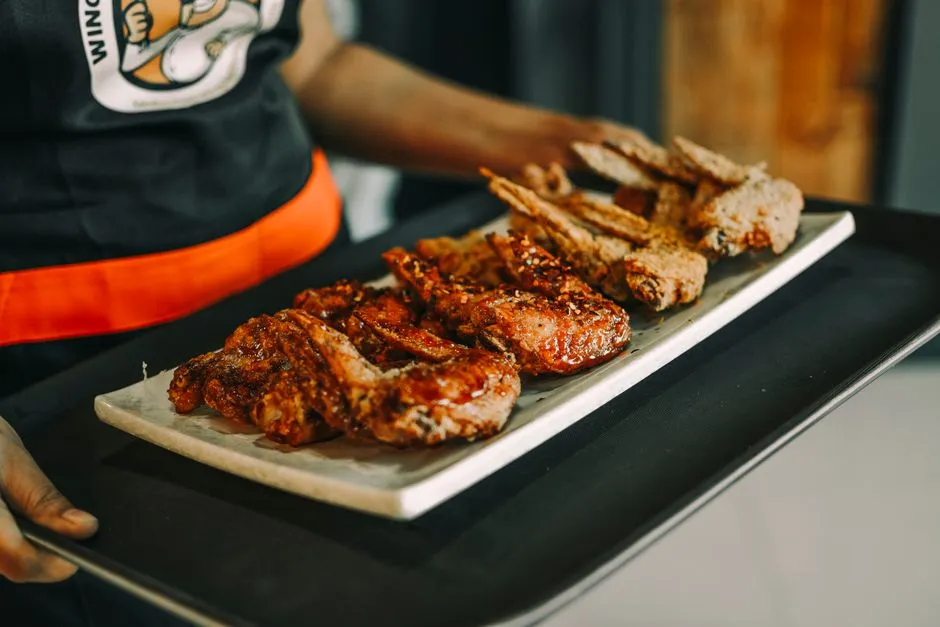
For a larger snack table, serve it beside crispy baked chicken wings rather than pouring it over the rack-crisp skin. Both foods get to remain themselves, which is a healthy relationship even by appetiser standards.
Troubleshoot before adding more ingredients
The sauce is grainy
Likely causes include excessive heat, cheese added too quickly, a particularly dry cheese, or pre-shredded cheese that did not incorporate well. Remove the pan from heat and stir in 15 millilitres warm milk. Vigorous whisking may make the texture look worse by encouraging fat separation, so use a steady stir.
Prevention works better than rescue: grate finely, thicken the liquid first, remove direct heat, and add cheese in small additions.
Oil is pooling on top
The sauce may have overheated or the cheese-to-liquid balance may be too high after evaporation. Remove from heat, stir gently, and add warm milk in 15-millilitre increments. If the mixture has fully broken, it may not return to perfect smoothness; serve safely and call the lesson useful rather than inventing a miracle.
The dip is too bitter
The beer may be more assertive after heating. Dilute with a little milk and additional cheese only if you have measured room in the formula. Next time, choose a less bitter beer. Adding sweetness can mute perception but also turns the flavour in a different direction.
The dip is bland
Taste it with the intended dipper first. Then add salt in 1-gram increments, more mustard in 5-gram increments, or a pinch of paprika or black pepper. “More of everything” makes troubleshooting impossible.
The dip became solid as it cooled
Cheese sauce naturally firms as its temperature falls. Warm it gently with 15 to 30 millilitres milk. If it repeatedly sets too firmly, record a larger finishing-milk amount for the cheese you use.
Scale with both weight and pan capacity
For a half batch, divide every ingredient by two:
| Ingredient | Full batch | Half batch |
|---|---|---|
| Cheddar | 340 g | 170 g |
| Butter | 30 g | 15 g |
| Flour | 30 g | 15 g |
| Beer | 180 ml | 90 ml |
| Milk | 240 ml | 120 ml |
| Mustard | 15 g | 7.5 g |
For a double batch, multiply each by two: 680 grams cheese, 60 grams butter, 60 grams flour, 360 millilitres beer, and 480 millilitres milk. Use a larger heavy pot. Expect the liquid to take longer to heat; doubling ingredients does not double burner output.
If serving the dip during a 90-minute home trivia night, a second smaller batch often holds more smoothly than one enormous pot kept warm all evening. Refill with safely hot dip rather than topping old dip with new.
Cool and reheat leftovers safely
Refrigerate the dip in a shallow covered container within 2 hours, or within 1 hour if the air temperature is above 90°F (32.2°C). Keep the refrigerator at 40°F (4.4°C) or below. USDA guidance uses a 3-to-4-day refrigerator window for leftovers.
Reheat only the portion you need in a small saucepan over low heat. Add a measured splash of milk and stir. Bring leftovers to 165°F (73.9°C), checking with a clean food thermometer, then serve. Repeated cooling and reheating steadily reduces quality and makes time tracking harder.
Discard dip that exceeded the safe time limit. Smell and appearance cannot reliably prove safety.
Let the method carry the flavour
Smooth beer cheese is a heat-management recipe disguised as a cheese recipe. Cook the flour, add liquid slowly, thicken before the cheese arrives, remove direct heat, and loosen by measured spoonfuls. Once that structure works, mustard, spice, beer character, and dippers become choices instead of rescue attempts.
If the snack is the welcome-home end of a Great Lakes weekend, prepare it after the drive. Dairy does not need a scenic tour of the car before it reaches the refrigerator.